VA Veterans Crisis Line ~ Dial 988 ~ Then Press 1
OV-10A "Bronco"
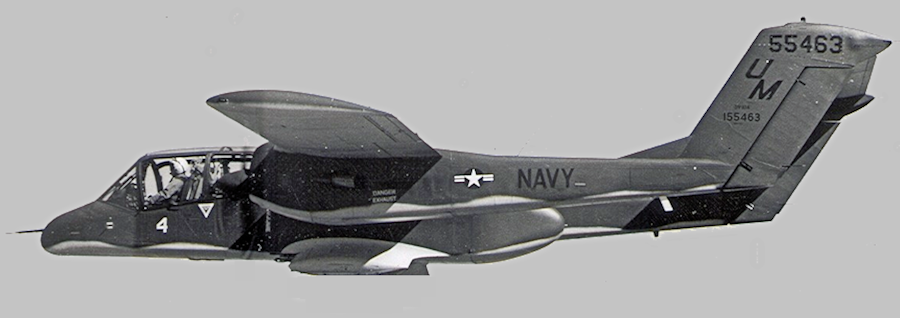
In 1963 a joint U.S. military requirement was issued for a Light Armed Reconnaissance Aircraft (LARA) aircraft that could perform multiple battlefield missions in low-intensity conflicts and counterinsurgency warfare.
The requirement called for an aircraft that could be used for forward air controling (directing strike aircraft onto targets); light attack; aerial reconnaissance; helicopter escort; or as a utility transport that could carry cargo or troops.
According to descriptions of the requirement, the aircraft was expected to be flown by two crew members; have two engines; carry approximately 2,400 pounds of cargo or six paratroopers; achieve about 350 mph speed; take off in roughly 800 feet and operate from rough, unimproved airstrips close to frontline troops and be suitable for a variety of services, including potential carrier-related operations.
Several manufacturers submitted designs. North American Aviation entered its NA-300 proposal, a twin-turboprop, twin-boom aircraft optimized for rough-field operations and long loiter times. In August 1964, the NA-300 was selected as the winning LARA design. The military assigned the designation OV-10 (O = Observation; V = Short Takeoff and Landing (STOL) aircraft; 10 = the next available design number in that series.
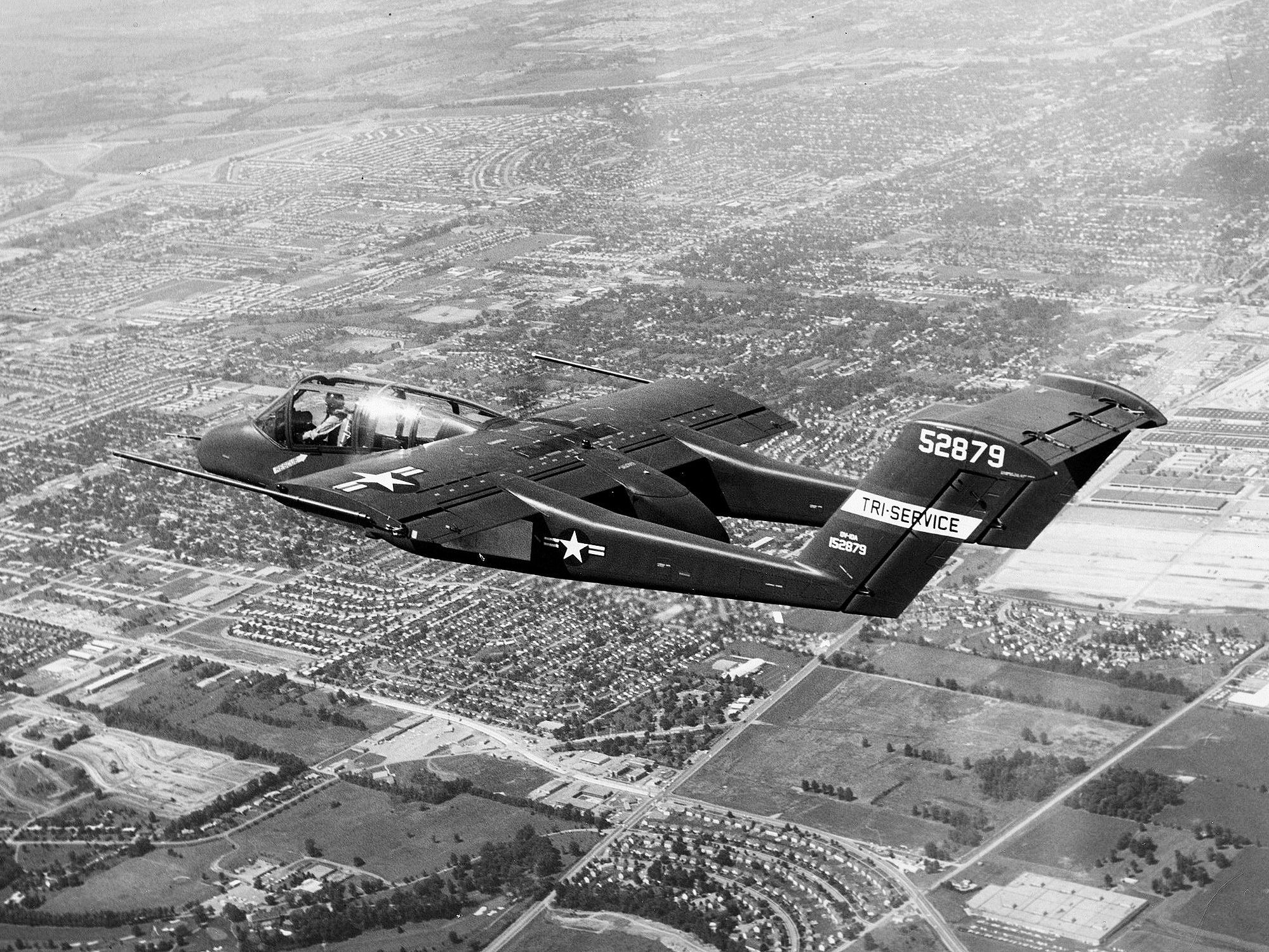
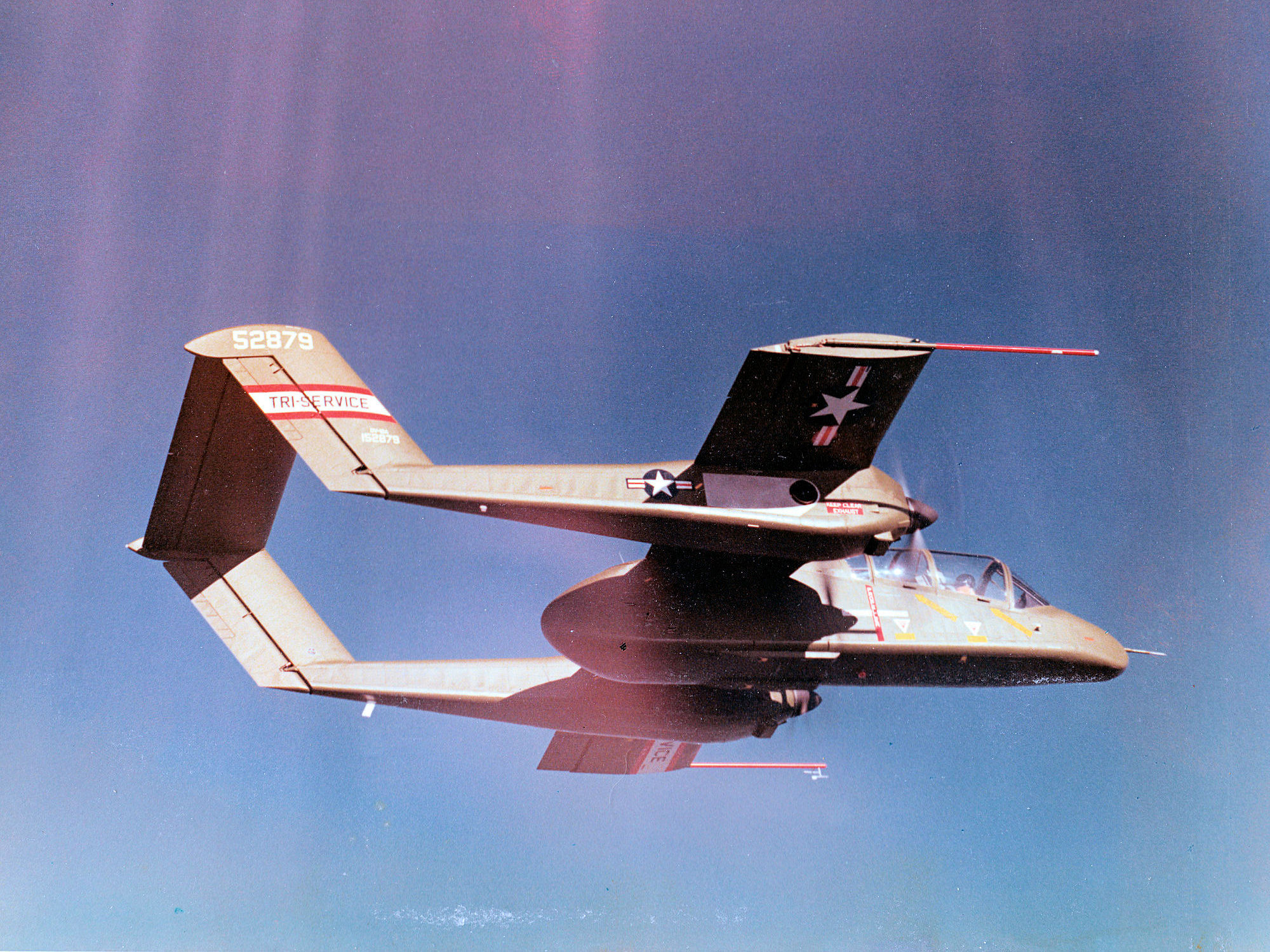
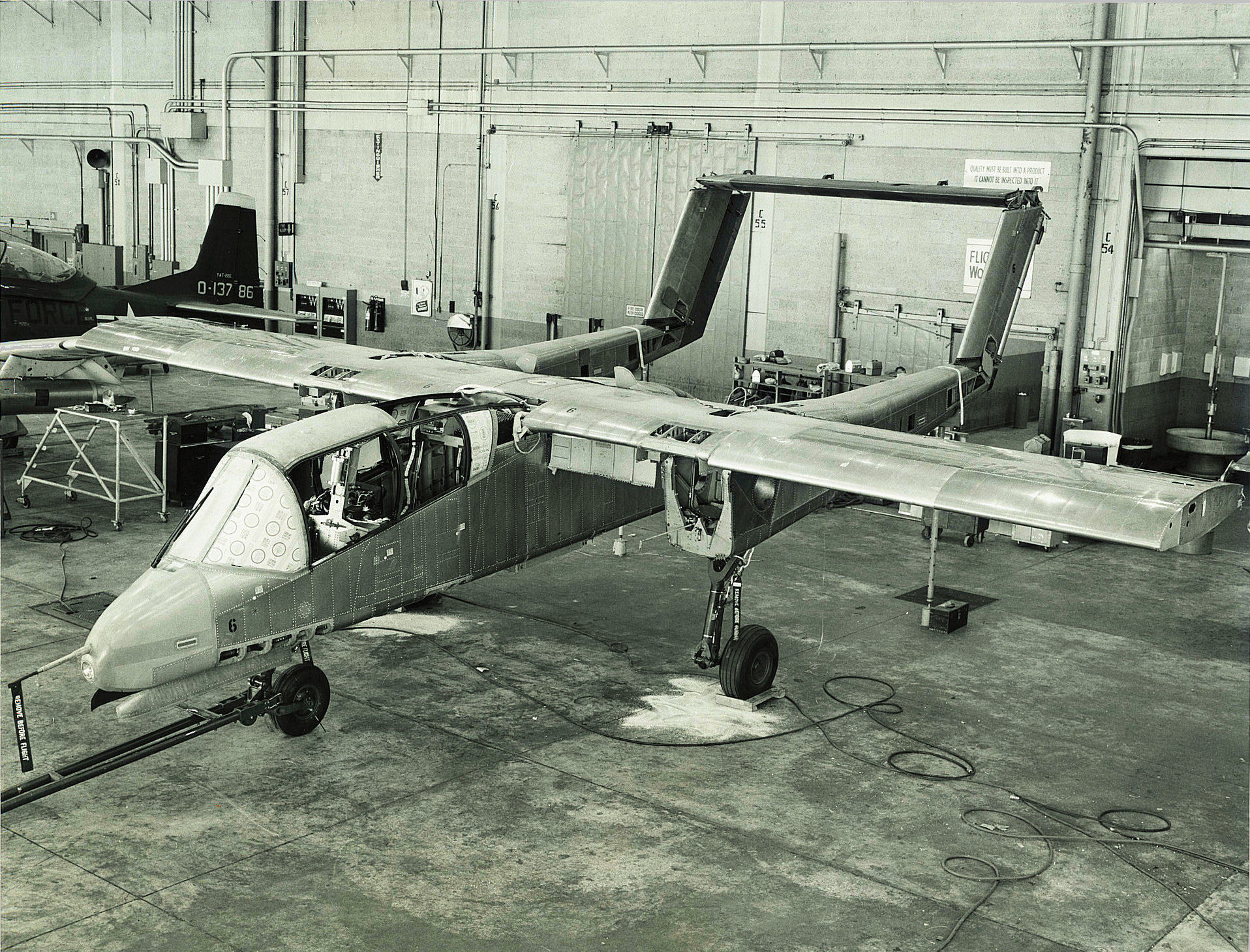
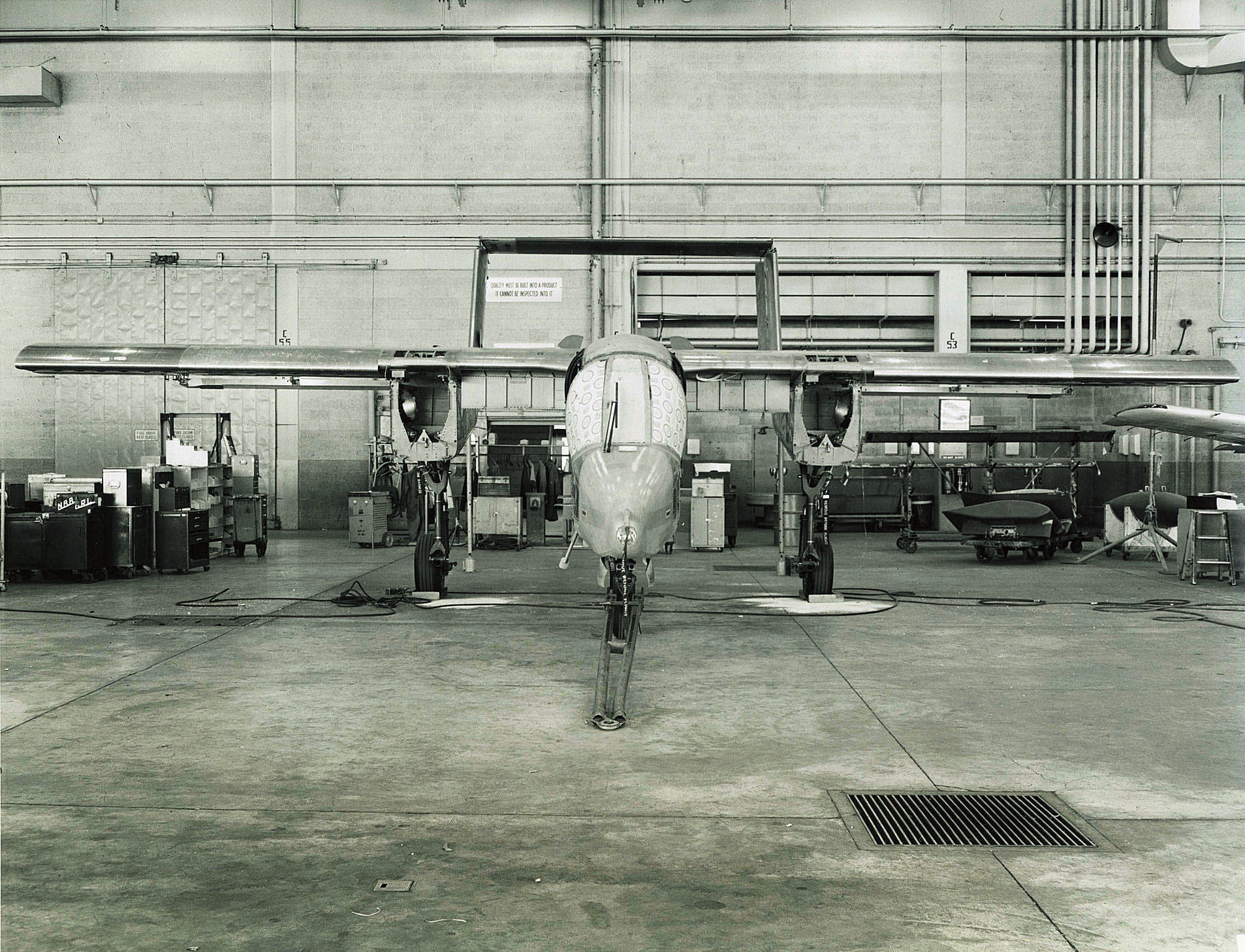
Thus, the NA-300 became the YOV-10A; North American built seven prototype aircraft for testing which subsequently led to the OV-10A Bronco production aircraft. The first prototype YOV10A flew on July 16, 1965. Flight testing of the YOV-10As showed that the Bronco needed to carry more fuel, weapons, and protection than originally envisioned. The result was a production OV-10A that was larger, more powerful, better protected, and more aerodynamically refined compared with the prototypes. NAA decided to extend the 30 foot wingspan by 10 feet to provide additional lift to meet payload, STOL, and operational requirements. More powerful engines were also added; prototype aircraft used early Garrett T76 engines, while the production OV-10A adopted higher-powered T76-G-10/12 engines to compensate for increased weight and improve performance. Tail and sponson refinements: The YOV-10A can be identified by the absence of the fin-root fillets used on production aircraft and by different, straighter sponson shapes. These features were altered on the OV-10A to improve handling and meet operational requirements.
North American Aviation's Artist Conception Of A Light Armed Reconnaisance (Counter Insurgency) Aircraft
In 1968, North American Rockwell began building 271 OV-10A "Bronco" aircraft; 114 for the United States Marine Corps and 157 for the United States Air Force. In the latter half of 1968 it was decided to strengthen the U.S. Navy's Task Force 116's Operation Gamewarden program in South Vietnam with close-in air support aircraft. The Navy 'borrowed' 18 OV-10A Broncos from the Marine Corps for use by Light Attack Squadron Four (VAL-4). In October delivery of the borrowed Broncos began arriving at VS-41 at Naval Air Station North Island in San Diego, California.
Source: Wikipedia
✈✈✈✈✈✈✈✈✈✈✈✈✈✈✈✈✈✈✈✈✈✈✈✈✈✈✈✈✈✈✈✈✈✈✈✈✈✈✈✈✈✈✈✈✈✈✈✈✈✈✈✈✈✈✈✈✈✈✈✈
| OV-10 Dimensions, Specifications & Data | ||
|---|---|---|
| Length: 41 Feet 7 Inches | Height: 15 Feet 1 Inch | Wingspan: 40 Feet |
| Wing Area: 291 Square Feet | Empty Weight: 7190 Pounds | Max. Take Off Weight: 14,440 Lbs. |
| Landing Speed: 70 MPH | Cruising Speed: 195 MPH | Max Speed @ Sea Level: 281 MPH |
| Take Off Roll: 679 Feet | Climb Rate 39 FPS | Service Ceiling: 28,800 Feet |
| Range | ||
| Armament | ||
Short Winged Aircraft:
After Extending The Wingtips:

Email: Additions/Comments
Page Recreated: September 2026